Goal-setting is the process in which a desired outcome is transformed into a specific goal and then into a sequence of actions. The work objective defines the criterion of the result, the term, the limitations and the method of verification. Formulation alone does not guarantee achievement: the outcome depends on actions, resources and conditions.
Let’s take a look at a small team that prepares a knowledge base for support. The team wants to improve answers to repeated customer questions. We will translate this task into a verifiable goal, choose an approach to its setting, determine intermediate results, highlight the first actions and organize work on the kanban board.
What makes the goal work
The work objective describes the specific result to be obtained and verified. The wording should give the team the same understanding of what will change after the work is done and on what basis the result will be accepted.
A phrase “Making Customer Responses Better” Denotes a direction, but does not set the limit of completion. It’s not clear which answers need to be reworked, how much work is needed, or what “better” means.
For example, we will set a goal:
Prepare and adopt 40 responses to recurring support questions by November 30. Each response is checked by a designated expert.
The number 40 and date refer only to the study example. They do not set a standard for the knowledge base and do not describe the actual Kanbano project.
Before starting work, the team checks:
- Why is the result needed now?
- which has already been prepared;
- who participates in the work;
- what resources are available;
- What restrictions may affect the term;
- On what fact is the completion determined.
Purpose should take a clear place among other obligations. A common system of priorities, workloads and regular review helps systemizeThe purpose does not exist separately from the current work.
How the goal is different from the task
The goal describes the desired change, and the task is the specific result of the work that brings the change closer.
On the example of a knowledge base, the levels look like this:
Formulation “working on a knowledge base” It is too broad for the task: the specific result is unclear. Formulation Collect five questions about restoring access This is an action that starts without a solution.
How to Choose a Targeting Method
Choose a method for the problem that needs to be solved when setting a goal. SMART checks the clarity of the result, WOOP helps to disassemble the obstacle in advance, OKR associates the overall direction of the team with several measurable results.
One method does not replace the others in all situations. The difference lies in the task of verification.
When SMART suits
SMART is suitable for a purpose with a clear direction that lacks a specific outcome, test criterion or deadline.
In the article we use a common transcript:
- Specific - specific;
- Measurable - measurable;
- Achievable - attainable;
- Relevant - significant;
- Time-bound - limited time.
A phrase “Improving the knowledge base” does not pass the check: the volume, acceptance criterion and completion date are unclear.
After clarification, the wording looks like this:
Prepare and adopt 40 responses to recurring support questions by November 30. Each material is reviewed by a designated expert.
SMART tests the structure of a goal, but does not automatically prove its attainability. Realism is defined by resources, constraints and actual progress.
When WOOP helps
WOOP is suitable for a situation in which the direction and outcome are clear, but a repetitive internal obstacle interferes with execution.
The method includes four elements:
- Wish - the desired result;
- Outcome - the expected outcome;
- Obstacle - an internal obstacle;
- Plan - pre-selected reaction.
For the knowledge base, an obstacle will be a situation in which experts regularly postpone the verification of materials because of the main work.
The reaction rule is formulated in advance:
The draft is waiting for inspection for more than two working days - the responsible person clarifies the new date of inspection or transfers the material to another agreed expert.
WOOP is not a substitute for an action plan. The method is needed in order to determine the obstacle and the solution in advance, and execution is still built on specific tasks.
Why the OKR team
OKR associates the overall direction of the command with measurable results against which the change is tested.
Objective sets the direction:
Make the knowledge base a working source for recurring support questions.
Key Results describe the facts supporting the movement:
- 40 responses to repeated questions
- Each accepted material has passed expert verification;
- Materials on selected topics are placed in an agreed structure.
There is no fixed universal number of key results. The set depends on the purpose and facts that actually confirm the change.
For a short individual task, OKR will add an extra level of control. In a team goal with multiple results, this structure helps to separate the direction and criteria for its execution.
How to formulate a work objective
Write down the observed result, acceptance criterion, source of verification, deadline, liability and limitation. The wording should allow at the checkpoint to determine whether the goal has been achieved or the work is still in progress.
For the knowledge base we obtain:
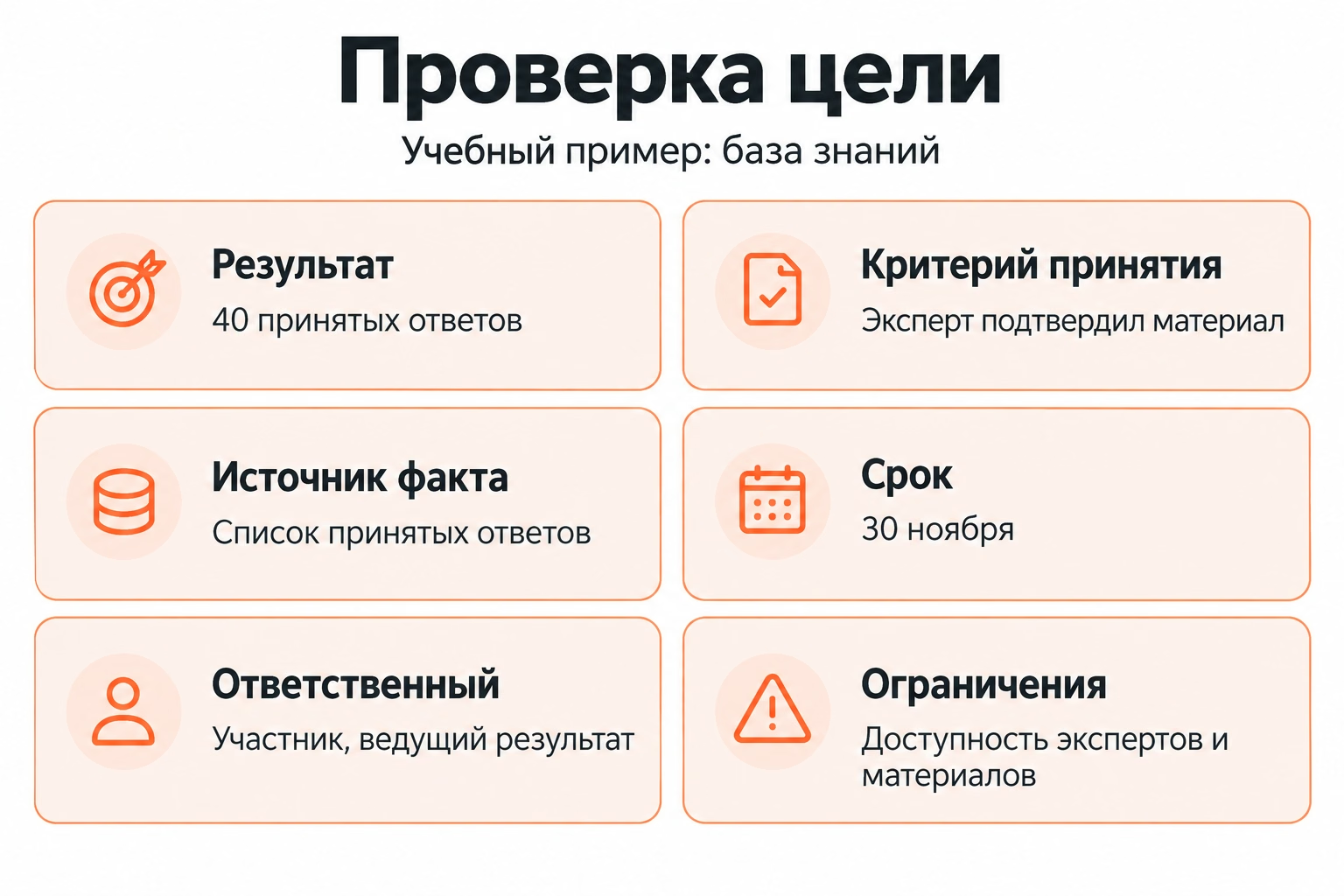
Prepare and adopt 40 responses to recurring support questions by November 30. Each response is checked by a designated expert.
The wording check includes six parameters:
- The result is 40 accepted answers;
- Criterion of acceptance - the expert confirmed the material;
- Source of fact – a list of prepared and accepted answers;
- deadline - 30 November;
- Responsible - a participant who leads the overall result;
- Restrictions – availability of experts and source materials.
How to define the criterion of the result
The outcome criterion should describe the state being tested, not the number of actions for the sake of the actions themselves.
A phrase "write 40 texts" He considers the prepared materials, but says nothing about their readiness. Texts can remain drafts, contain outdated information or do not pass expert verification.
In the educational goal, the unit of result becomes reply. The material is considered accepted after verification by the appointed expert.
The source of the fact is also determined in advance. For example, this source is a list of materials with a note of acceptance. The team checks the actual state rather than restoring the result from the participants’ memory.
How to check the realism of the deadline
Compare time with workload, resources, dependencies and already known limitations.
For the knowledge base, the team evaluates:
- How many materials already exist;
- How many answers need to be prepared from scratch;
- how many participants write texts;
- How many experts check the materials;
- How long does it take to reconcile;
- What initial information is missing.
A calendar deadline does not make the goal realistic. Lack of people, materials, or time requires changing the scope, completion date, or organization of work before the main cycle begins.
How to break down the goal into tasks
Divide the goal into intermediate verifiable results, then turn the immediate result into specific tasks and define the first action.
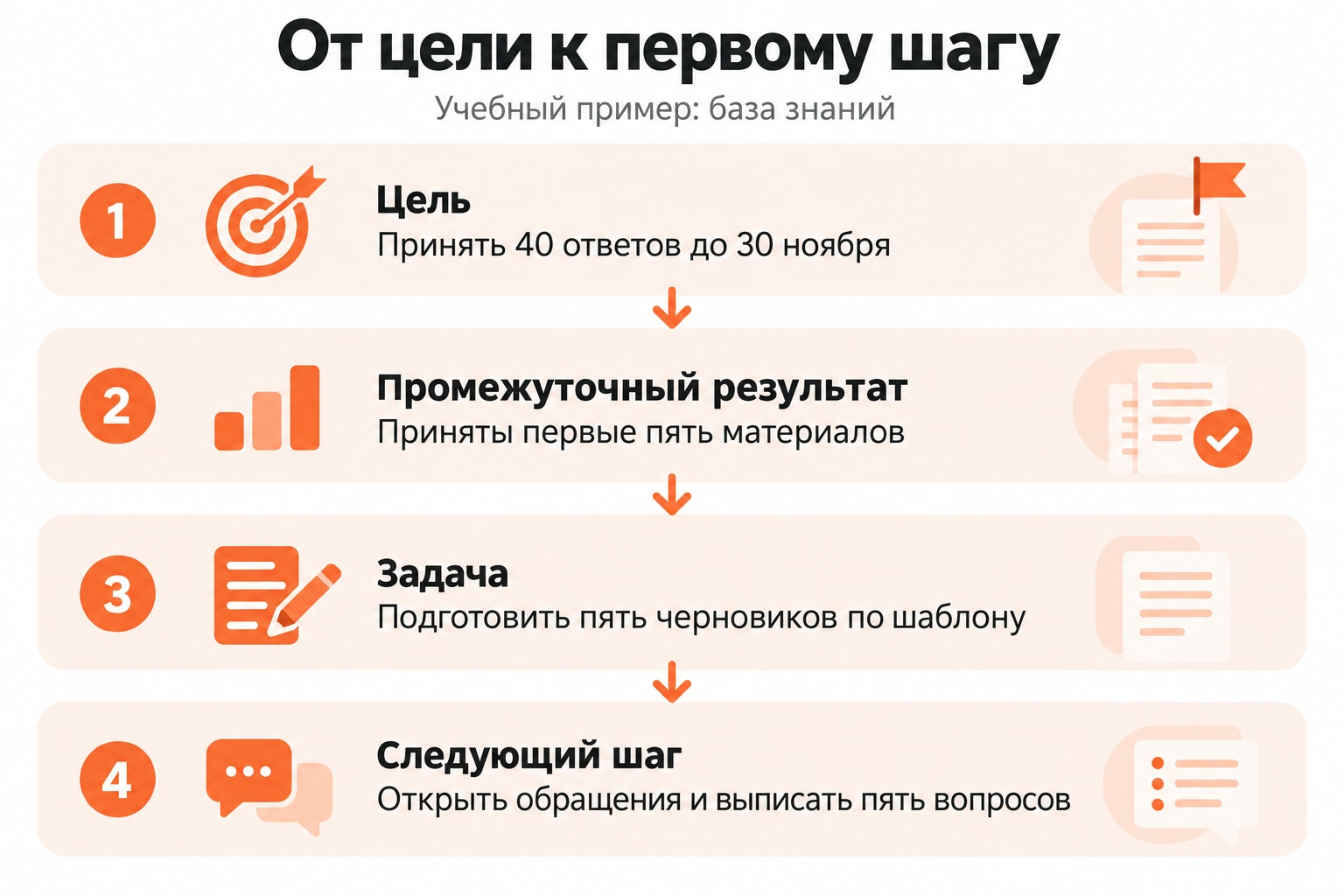
For the knowledge base, the chain looks like this:
Purpose → agreed template → first accepted answers → thematic blocks → final set.
The first intermediate result is a consistent response pattern. The team first determines the structure of the material, and then prepares a large volume according to one rule.
For the first five answers, there are two problems:
- Collect five recurring questions about restoring access.
- prepare five drafts according to the agreed template.
Immediate action:
Open access restoration requests and write out five recurring questions.
How to determine intermediate results
Formulate the intermediate result as a new testable state.
A phrase "work on the pattern" describes the process. Formulation The response pattern is accepted by the responsible It sets a boundary, after which the next stage begins.
For the knowledge base, intermediate results will be:
- agreed response template;
- The first five materials were adopted;
- the first thematic block is closed;
- the entire planned set has been prepared;
- The final check has been completed.
Each result reduces the uncertainty of the next stage and gives reason to continue.
How to choose the first step
The first step should begin without further choice and discussion.
Formulation "engage in the knowledge base" It makes you decide again where to start. Formulation Collect five recurring questions about restoring access It already contains a clear action and result.
After decomposition, the tasks obtained are required line up based on the available load. A long-term goal does not have to be turned into a one-day plan.
How to Transfer a Plan to a Kanban Board
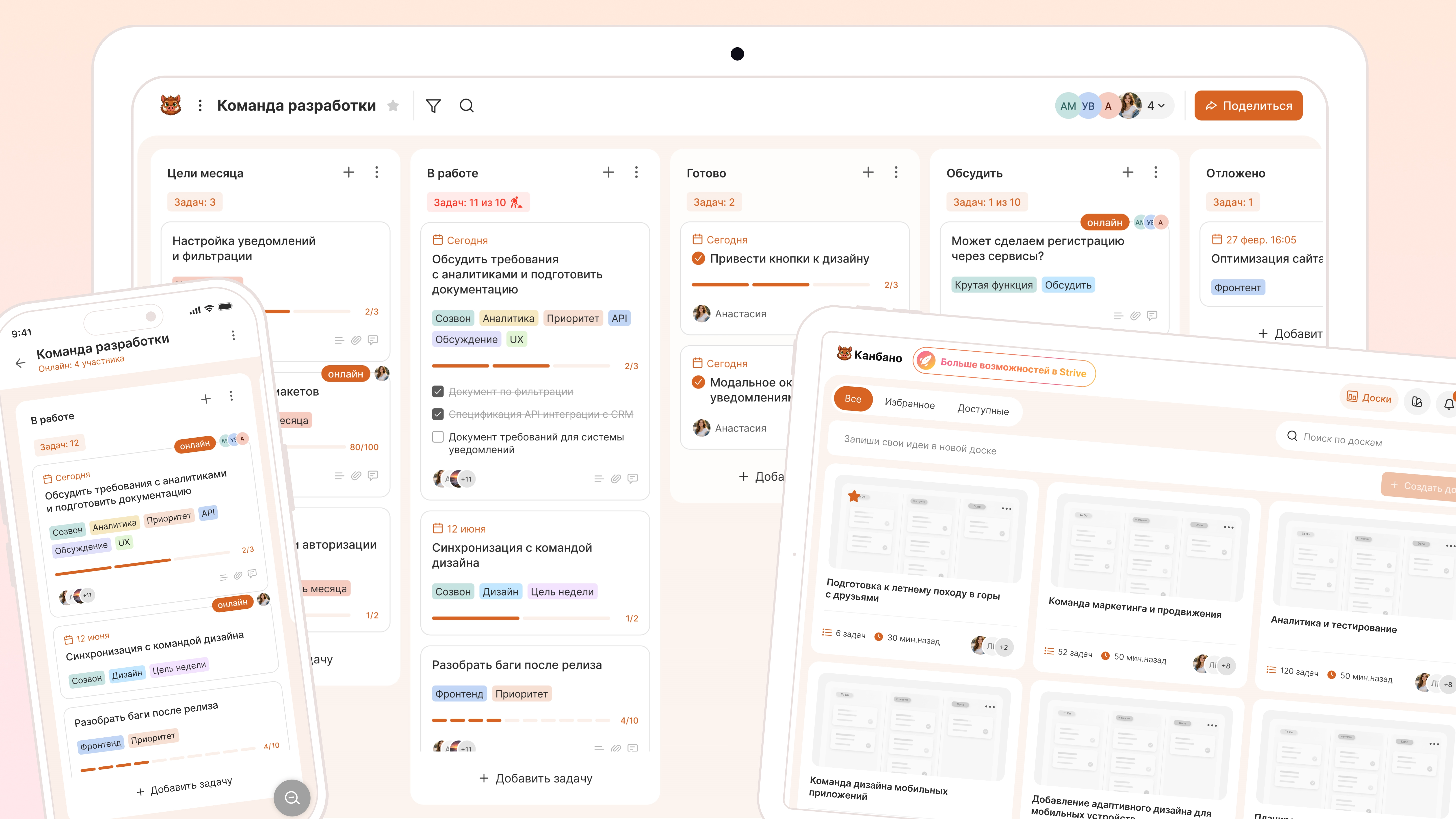
Place the wording of the goal as a guide, and work tasks run through the states of the board. The Kanban board shows the movement of specific actions, and the overall result is checked by a person according to a predetermined criterion.
For a training example, we use the scheme:
Guidelines → Planned → Work → Check → Ready.
In the "Orientir" there is a reference card:
Prepare and accept 40 responses by November 30.
The working part of the board contains separate tasks:
- agree on a response template;
- Collect five questions about restoring access.
- prepare five drafts;
- Check out five materials.
Columns are needed in order to show the stages of work Specific cards. The training scheme is changed to the real process of the team: add the necessary states, remove unnecessary ones and use clear transition rules.
What columns show the stages
The columns should correspond to the actual state of the task, and the transition between them to a specific change in the work.
In the curriculum:
- Landmark stores the wording of the purpose;
- Planned. contains prepared tasks;
- At work. shows the started execution;
- Verification contains the finished result before acceptance;
- Ready. Keeps the assigned tasks.
The number and names of the columns are set for the process. In Kanbano, the card stores the description, date, marks, status, checklist and attachments.
What to keep in a card
The reference card of the goal stores the wording, the criterion of the result, the term and the person responsible. The work card contains only the information necessary for a specific task.
For the card. “Prepare five responses to restore access” will need:
- The result is five drafts.
- Description - a list of selected questions;
- date of inspection;
- tag of the thematic block;
- checklist of mandatory parts of the answer;
- raw materials.
The status of the individual card does not reflect the status of the entire target. Completion of five answers closes one intermediate result, and the general guideline remains valid until the specified criterion is met.
How to check the movement of the target
Compare the actual state with the goal criterion, determine the cause of the deviation and choose the following solution. Manual review is not for reporting for the sake of reporting, but for changing future actions.
The cycle looks like this.
Objective criterion → fact → obstacle → solution → next step.
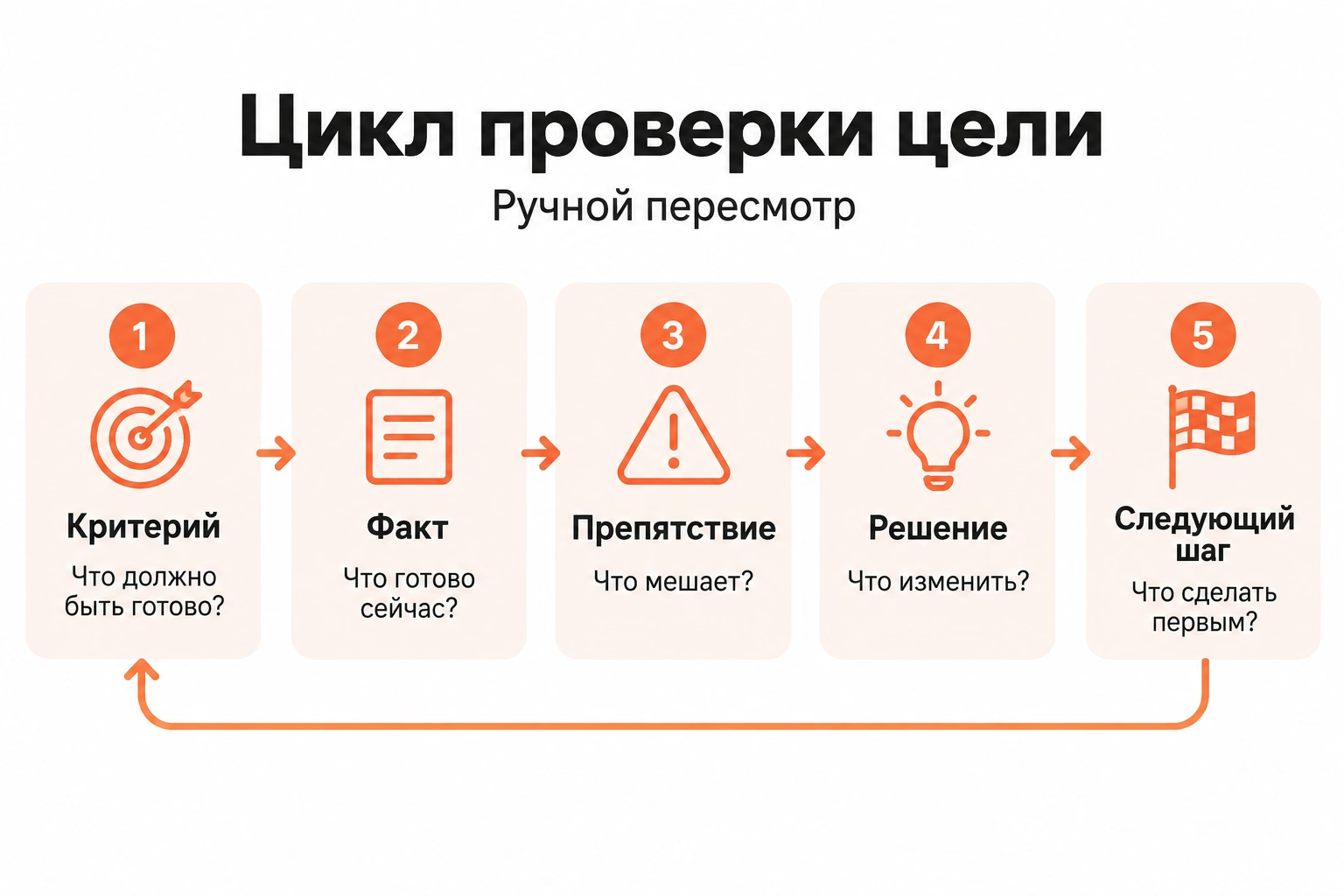
For the knowledge base, the team opens a list of accepted materials, checks the number of completed answers, and determines which stages delay the work.
The frequency of revision depends on the target horizon and the rate of change. A short team goal requires more frequent checkpoints than a long-term direction.
When to change the plan
Change the plan while maintaining the goal if current actions do not lead to the desired result or face a new limitation.
For example, experts do not have time to check the materials, and the queue of drafts is growing. The team maintains the overall result, but changes the organization of work: reduces the size of the package, distributes topics among experts or changes the sequence of preparation.
The results already obtained are not rewritten. The plan is changing.
New data may require a revision of the formulation of the goal. In this case, a new criterion and the date with which it is valid are fixed, so as not to confuse the results obtained under different rules.
When to give up the goal
Abandon the goal if the result has lost value, the necessary resource has become unavailable, or new data shows no previous need.
Rejection of the goal fixes the change of conditions, and not automatically means failure of work.
The basis for the knowledge base will be the termination of the direction of support for which the materials were prepared. Continuing to work after the need disappears will waste time without a useful result.
Before closing the goal, save the basis of the decision and the work already done. Prepared materials remain the result, even if the original reference point is no longer relevant.
The first work cycle begins with a specific action: start offWrite down the result criterion and add the next tasks to the board.